Traditional Japanese Indigo Dyeing
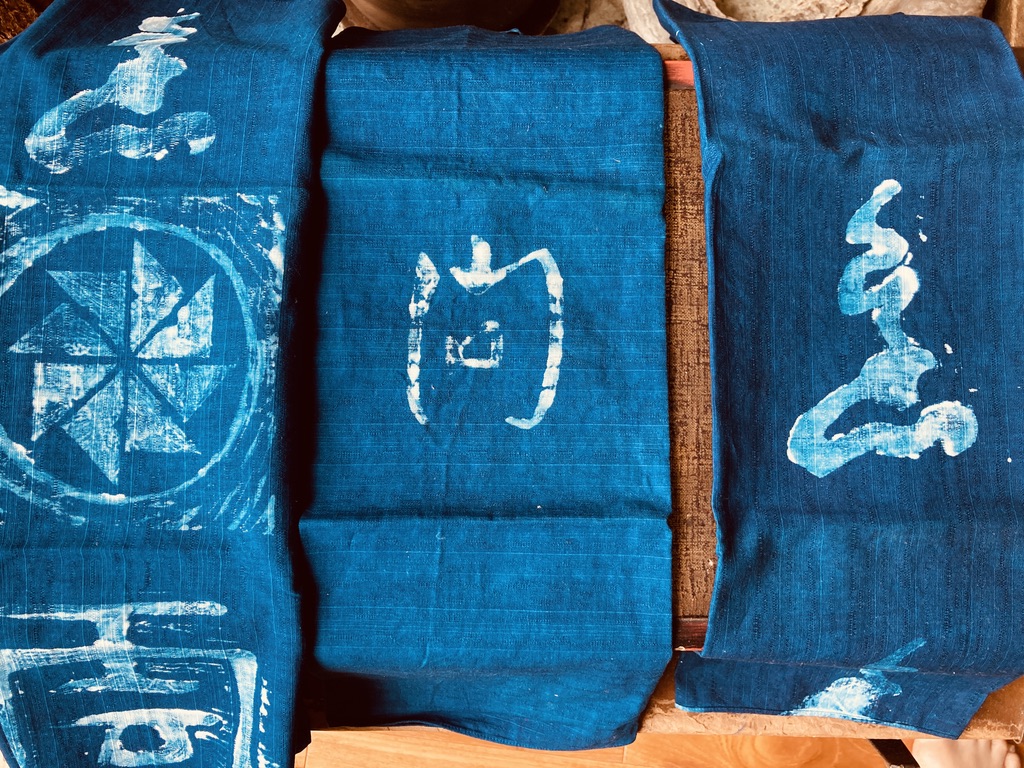
In this workshop, participants will work with an indigo-dyed tenugui (traditional Japanese hand towel) and use a
technique called discharge dyeing to create their own designs by removing the indigo colour from the fabric.
Discharge dyeing is a method in which a special paste is applied to already dyed fabric to remove colour.
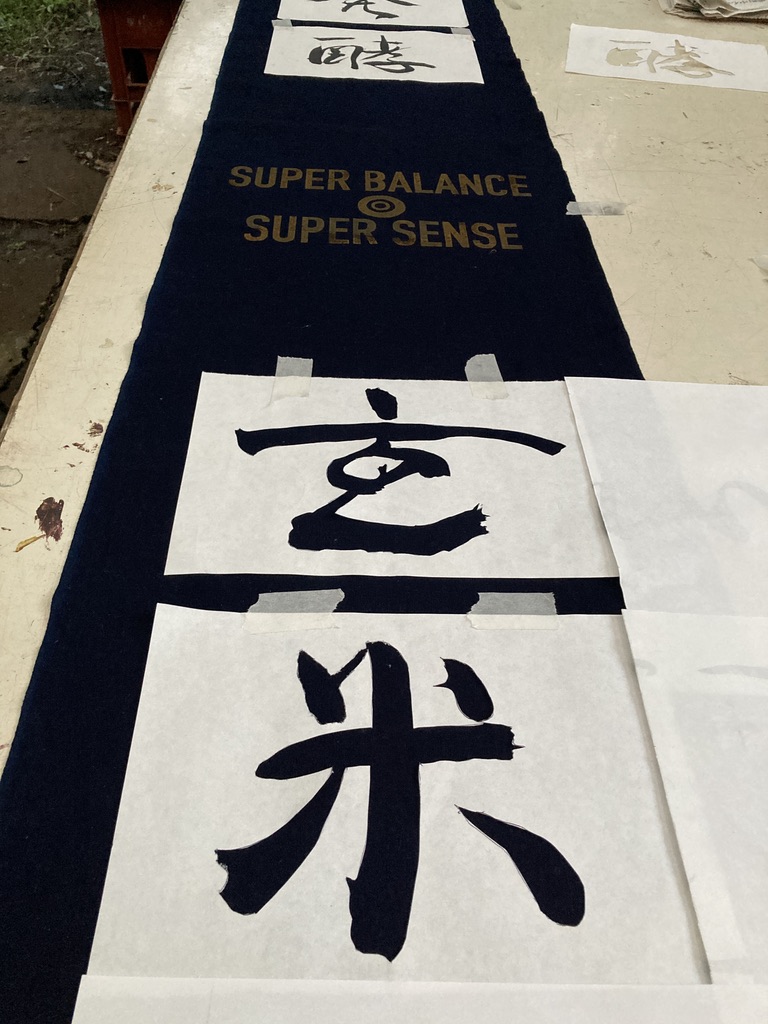
First, participants draw their design or pattern on paper and cut out the areas they want to appear white.
This stencil is
then placed on the fabric, and the discharge paste is applied.
The areas where the colour is removed become
lighter or white.
This technique has traditionally been used in some patterns found on Japanese kimono and
yukata.
Through experiencing the traditional Japanese techniques of indigo dyeing and discharge dyeing, we hope
participants will also enjoy the creative process of expressing their own designs and artwork.
About Indigo Dyeing
Aizome (indigo dyeing) is a dyeing technique that uses natural plants and has been practiced in Japan for over
1,000 years.
From around the 1600s, it was widely used for samurai armour, and during the Edo period it became
deeply integrated into the daily lives of ordinary people.
The distinctive indigo blue has since come to
represent Japan and is still known today as “Japan Blue.”
The popularity of indigo dyeing lies not only in its beautiful deep blue colour, but also in its functional qualities,
such as insect-repellent, antibacterial, and deodorizing effects. It was also traditionally believed to ward off evil
spirits.
About the artist
KYOKO KUROTAKI
黑瀧 京子
ARTIST
Born in Japan
1989 - 1999
Live and study in England
2000 - 2023 Move to Japan
2023 ~ Move to Netherland, Amsterdam
Education
BA Honours Fine Art Sculpture, Loughborough University, UK
Exhibition
1994年 Entered “Box Art” Exhibition, Nottingham Castle Gallery UK
1996年 Group Exhibition “Sculpture at Buddon Wood” UK
1998年 Group Exhibition “Sculpture XCV3 Exhibition ” Dioramas Arts Center , London UK
1999年 Solo Exhibition “KYOKO KUROTAKI“ Chichester UK
2004年 Art works used for the theatre catalogue of “Headwig and The Angry Inch”
2007年 Solo Exhibition “KYOKO KUROTAKI“ Gallery eclipse art Tokyo
2008年 Entered Seventh Spiral Independent Creators’s Festival
2008年 Solo Exhibition “Release Yourself” Studio + Lotus8 Tokyo
2009年 Group Exhibition Sky Walker, xerosen art show RedBull Art “Akika Art Competition “
2024年 Solo Exhibition " BEYOND THE EMOTION " Studio Saphatipark, Amsterdam NL
Socials
Instagram
Website
Linktree
Ontwerp je eigen favoriete patronen, afbeeldingen of designs op met indigo geverfde stof met behulp van een ontkleurtechniek (discharge dyeing) en maak je eigen TENUGUI (Japanse handdoek)!
Tijdens deze workshop werken deelnemers met een indigo-geverfde tenugui (traditionele Japanse handdoek) en gebruiken zij een techniek die discharge dyeing wordt genoemd. Hierbij wordt de indigo-kleur deels uit de stof verwijderd om zo een eigen ontwerp te creëren. Discharge dyeing is een methode waarbij een speciale pasta wordt aangebracht op reeds geverfde stof om de kleur te verwijderen.
Eerst tekenen de deelnemers hun ontwerp of patroon op papier en snijden de delen uit die wit moeten worden. Deze sjabloon wordt vervolgens op de stof geplaatst, waarna de ontkleurpasta wordt aangebracht. Op de plekken waar de kleur wordt verwijderd, ontstaan lichtere of witte delen. Deze techniek wordt traditioneel gebruikt in bepaalde patronen op Japanse kimono en yukata.
Door kennis te maken met de traditionele Japanse technieken van indigo verven en discharge dyeing, hopen we dat deelnemers niet alleen meer leren over deze traditionele kunstvorm, maar ook genieten van het creatieve proces en het tot leven brengen van hun eigen ontwerpen en kunstwerken.
Over indigo verven
Aizome (indigo verven) is een verftechniek die gebruikmaakt van natuurlijke planten en al meer dan 1.000 jaar in Japan wordt toegepast. Vanaf ongeveer de 17e eeuw werd deze techniek veel gebruikt voor samoeraiharnassen, en tijdens de Edo-periode raakte zij diep verweven met het dagelijks leven van de gewone bevolking. De kenmerkende indigoblauwe kleur is sindsdien uitgegroeid tot een symbool van Japan en staat nog steeds bekend als “Japan Blue”.
De populariteit van indigo verven ligt niet alleen in de prachtige diepe blauwe kleur, maar ook in de functionele eigenschappen, zoals insectenwerende, antibacteriële en geurwerende effecten. Traditioneel werd ook geloofd dat indigo bescherming bood tegen kwade geesten.